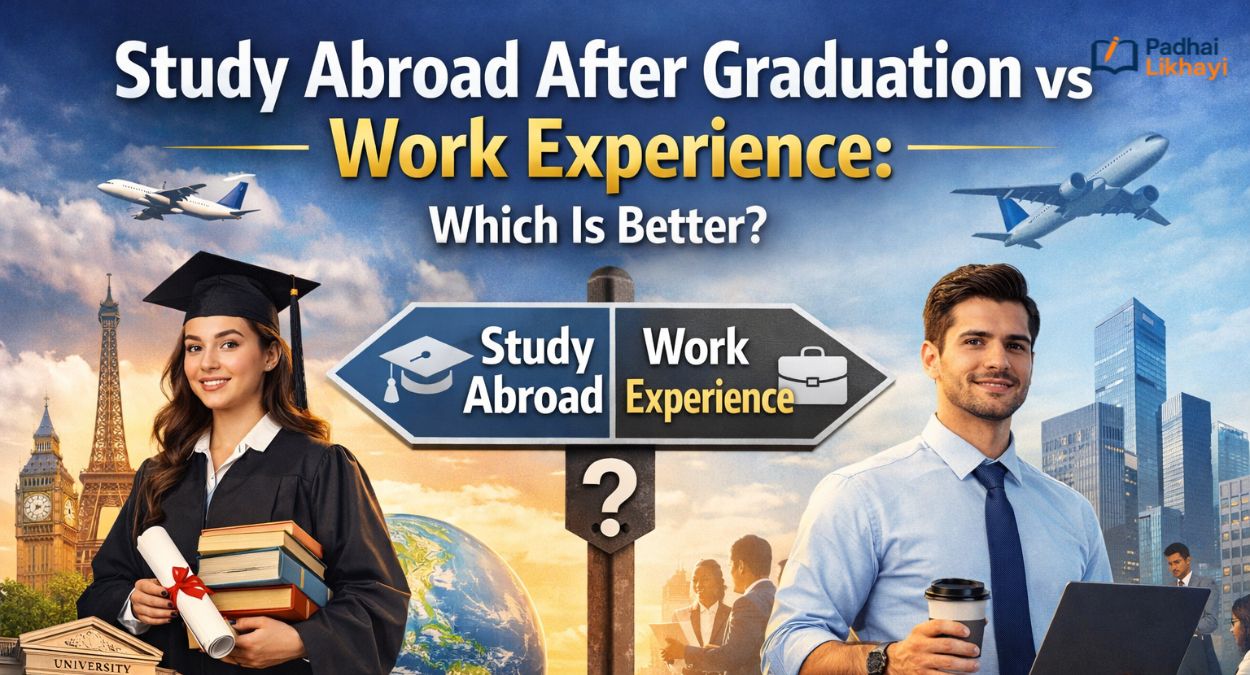
Choosing to study abroad is one of the biggest decisions a student can make. It affects students’ careers, lifestyles, finances, and future plans. The real question is not whether to go for many students, but when. Should students choose to study abroad after graduation, or should they first gain some work experience and then apply?
Both choices can change life in powerful ways. Each option comes with opportunities, risks, and long-term effects on the professional journey. The key is understanding what suits a student’s goals, personality, and financial situation.
This article will discuss the advantages and drawbacks of studying abroad after graduation, compare it with studying after work experience, and help decide the best path.
Study Abroad After Graduation
When we talk about Study Abroad After Graduation, we refer to students who complete their bachelor’s degree and immediately apply for master’s programs abroad. Many students choose fields such as engineering, data science, management, economics, pure sciences, and computer science and AI.
Because students are already in “study mode,” they often adapt smoothly to academic life abroad. The routine of classes, assignments, labs, and research does not feel new or intimidating. For many, studying abroad after graduation feels like a natural continuation of learning.
Another strong advantage is time. Students who pursue study abroad after graduation start their global careers earlier. They have more years ahead to explore industries, switch roles, move between countries, and grow professionally.
However, this path is not perfect. Many students who choose to study abroad after graduation do not yet have clear career goals. Choosing the right specialization becomes harder without work . Employers in many countries also prefer candidates with practical experience. This can sometimes make internships and job placement more competitive after graduation.
Also Check: Canada vs USA: Which Is Better for International Students?
Benefits of Study Abroad After Graduation
There are several reasons why Study Abroad After Graduation has become popular among Indian and international students:
- The study habits remain strong because students just finished college. They feel comfortable reading, researching, and taking exams.
- Completing master’s degree early allows more time to experiment, explore industries, and build long-term success abroad.
- Students who choose to study abroad after graduation meet professors, researchers, and professionals at a young age. These networks often last for decades.
- Students do not need to “restart” studying after years of working. Their lifestyle, focus, and learning discipline are already aligned with academics.
It is important to remember that job markets change. Selecting a course simply because it is trending today may not always work in the long run. Thoughtful planning is essential.
Studying Abroad After Work Experience
Now let’s discuss the other side, studying abroad after gaining work experience. Many universities value applicants who have already worked in industry.
The following are the benefits of studying abroad after work experience:
- Better clarity about their career goals
- Stronger resumes for admissions and scholarships
- Practical knowledge to connect classroom learning with real-life problems
Programs such as MBA, Public Policy, Management, and advanced STEM fields especially prefer candidates with relevant experience.
Universities often view experienced candidates as leaders. They contribute actively to discussions and group projects. From an employer’s perspective, graduates who studied abroad after working are often seen as “job-ready.”
Yet, there can also be challenges. Returning to classrooms after years of working may feel difficult. Adjusting to lower salaries during study, adapting to academic assignments again, and handling age-related visa issues can create stress. Delaying studies might also increase tuition costs and bring changes in immigration policies.
Studying after work experience can be highly rewarding for students who crave maturity, clarity, and stability before investing money.
Study Abroad After Graduation vs Work Experience
In terms of long-term career growth, both paths offer strong potential. However, candidates with prior work experience often progress faster in leadership roles. When education combines with real industry exposure, employers see tremendous value.
Graduates who choose to study abroad after graduation may sometimes need extra time initially to adjust to job expectations. But as they gain experience, they quickly build momentum and catch up.
Visa outcomes and employer sponsorships vary by country and industry, but candidates with proven work records often stand out. That said, students who choose to study abroad after graduation also benefit from early exposure, flexibility, and adaptability.
The success of a student ultimately depends on the following:
- Chosen course
- The country for study
- Internship opportunities
- Networking and communication skills
- Willingness to learn and adapt
Also Check: Best Countries to Study Abroad for Indian Students in 2026
FAQs
Q.1. Is studying abroad after graduation a good idea?
Ans. Yes, it offers early global exposure, strong academic continuity, and wider career opportunities.
Q.2. Is work experience required to study abroad?
Ans. Not always, but experience improves admissions chances, scholarships, and job prospects.
Q.3. Which is better: Study Abroad After Graduation or after work experience?
Ans. It depends on personal goals, early learning vs career clarity.
Q.4. Does studying abroad after graduation help in getting international jobs?
Ans. Yes, especially when combined with internships and networking.
Q.5. Can I apply for scholarships if I choose to study abroad after graduation?
Ans. Absolutely, many universities offer merit-based and need-based scholarships.