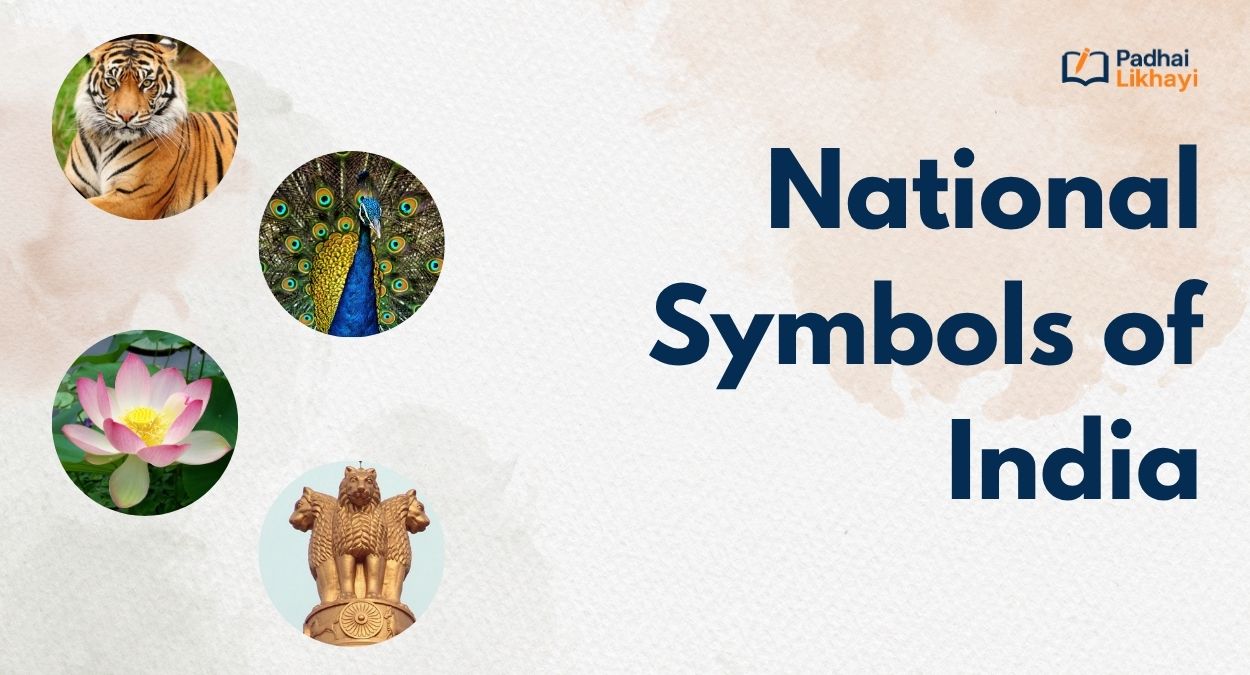
The National Symbols of India represent the country’s culture, history, and national pride. These symbols serve as reminders of India’s unity, diversity, and strength. Each symbol carries deep meaning and reflects the essence of our nation’s heritage.
These symbols inspire every Indian to stay connected with the nation’s roots. The National Symbols of India not only showcase India’s values but also strengthen the feeling of patriotism among citizens. They hold educational, historical, and emotional importance, especially for students and aspirants preparing for exams like UPSC and SSC.
What Are the National Symbols of India?
The National Symbols of India are officially recognized symbols that reflect the country’s identity and ideals. They represent India’s cultural wealth, biodiversity, and respect for unity in diversity. The Government of India has declared 17 national symbols, each with a special meaning and purpose.
These symbols include the National Flag, Emblem, Anthem, River, Animal, Bird, and more. Together, they form the foundation of India’s national identity and are a source of pride for every Indian citizen.
List of National Symbols of India
The followinhs is the complete list of the National Symbols of India along with their names:
| Symbol Type | Name |
|---|---|
| National Flag | Tiranga |
| National Emblem | Lion Capital of Ashoka |
| National Anthem | Jana Gana Mana |
| National Song | Vande Mataram |
| National Currency | Indian Rupee (₹) |
| National Calendar | Saka Calendar |
| National Pledge | Oath of Allegiance |
| National River | Ganga |
| National Animal | Royal Bengal Tiger |
| National Bird | Indian Peacock |
| National Tree | Indian Banyan |
| National Flower | Lotus |
| National Fruit | Mango |
| National Vegetable | Pumpkin |
| National Heritage Animal | Indian Elephant |
| National Aquatic Animal | Ganges River Dolphin |
| National Reptile | King Cobra |
Explanation of Each National Symbol of India
Below are the National Symbols of India explained in detail:
1. National Flag – Tiranga
The National Flag of India, called the Tiranga, was designed by Pingali Venkayya and adopted on July 22, 1947. It has three colors: saffron for courage, white for peace, and green for prosperity. The Ashoka Chakra in the center stands for truth and progress. The National Flag represents the spirit of freedom and unity across India.
2. National Emblem – Lion Capital of Ashoka
The National Emblem of India is derived from the Lion Capital of Ashoka at Sarnath. It features four lions standing back-to-back, symbolizing courage, power, and confidence. The motto “Satyameva Jayate” (Truth Alone Triumphs) is inscribed below, representing justice and honesty.
3. National Anthem – Jana Gana Mana
India’s National Anthem, “Jana Gana Mana,” was composed by Rabindranath Tagore. It was officially adopted on January 24, 1950. The anthem reflects the unity and diversity of India and fills every citizen’s heart with pride and respect for the nation.
4. National Song – Vande Mataram
“Vande Mataram,” written by Bankim Chandra Chatterjee, is the National Song of India. It praises the motherland and played a key role in inspiring freedom fighters during the independence movement. It symbolizes devotion and love for the country.
5. National Currency – Indian Rupee
The Indian Rupee (₹) is the official currency of India. Designed by Udaya Kumar Dharmalingam, the rupee symbol combines the Devanagari “र” and the Latin “R.” It represents India’s economic strength and progress.
6. National Calendar – Saka Calendar
The Saka Calendar is used for official government purposes in India. It was adopted on March 22, 1957, and runs alongside the Gregorian calendar. It reflects India’s historical and scientific traditions.
7. National Pledge – Oath of Allegiance
The National Pledge is a promise of loyalty to the nation. It begins with “India is my country,” emphasizing unity, peace, and discipline. Reciting the pledge promotes responsibility and love for the country.
8. National River – Ganga
The Ganga is India’s National River, declared in 2008. It is sacred to millions of Indians and holds immense cultural and spiritual value. The river supports agriculture, provides water to millions, and is deeply connected with India’s civilization.
9. National Animal – Royal Bengal Tiger
The Royal Bengal Tiger is India’s National Animal, symbolizing strength, courage, and grace. It represents the country’s commitment to wildlife conservation. The tiger also highlights India’s rich biodiversity and natural beauty.
10. National Bird – Indian Peacock
The Indian Peacock, adopted in 1963, is India’s National Bird. Known for its colorful feathers and elegant dance, it represents beauty, pride, and vibrancy. The peacock is also linked to Indian mythology and spirituality.
11. National Tree – Indian Banyan
The Indian Banyan Tree symbolizes immortality and unity. Its large roots and branches represent strength and connection. It is often seen as a symbol of shelter and wisdom in Indian culture.
12. National Flower – Lotus
The Lotus is the National Flower of India. It symbolizes purity, beauty, and spiritual enlightenment. Despite growing in muddy water, the lotus remains untouched by dirt. This represents resilience and strength of character.
13. National Fruit – Mango
The Mango is the National Fruit of India, loved across the country for its sweetness and flavor. It represents prosperity and abundance. The mango also holds cultural importance in Indian art, festivals, and traditions.
14. National Vegetable – Pumpkin
The Pumpkin is the National Vegetable of India, known for its nutritional value and availability across the country. It is an essential part of Indian cuisine and symbolizes simplicity and health.
15. National Heritage Animal – Indian Elephant
The Indian Elephant is declared as the National Heritage Animal to highlight the need for its conservation. It stands for strength, intelligence, and peace. The elephant holds a sacred place in Indian culture and religion.
16. National Aquatic Animal – Ganges River Dolphin
The Ganges River Dolphin represents India’s rich aquatic life. Declared as the National Aquatic Animal in 2009, it reminds us of our responsibility to protect endangered species and maintain river ecosystems.
17. National Reptile – King Cobra
The King Cobra is the National Reptile of India. It symbolizes alertness and power. The cobra is respected in Indian mythology and is a vital part of the ecosystem.
| Also Check |
|---|
| Longest Rivers in India |
| Chief Ministers and Governors of Indian States |
| Nobel Prize Winners 2025 |
| National Parks in India 2025 |
Significance of the National Symbols of India
The National Symbols of India reflect the nation’s unity, diversity, and shared values. They remind us of the country’s glorious past, natural wealth, and moral strength.
Knowing about these symbols builds a sense of responsibility and national pride. They also play a vital role in national integration and help represent India’s image globally.
Every symbol, whether the Tiranga, Lotus, or Tiger, tells a story of India’s courage, purity, and determination. Together, they strengthen the bond between citizens and the nation.
Stay updated with GK and Current Affairs at PadhaiLikhayi!!
National Symbols of India FAQs
Q1. How many National Symbols of India are there?
Ans. There are 17 officially recognized National Symbols of India.
Q2. What is the National Animal of India?
Ans. The Royal Bengal Tiger is the National Animal of India.
Q3. Which is the National Flower of India?
Ans. The Lotus is the National Flower of India, symbolizing purity and beauty.
Q4. What does the Indian National Flag represent?
Ans. The National Flag of India represents courage, peace, and prosperity.
Q5. Who composed India’s National Anthem?
Ans. The National Anthem, “Jana Gana Mana,” was composed by Rabindranath Tagore.